
Hiking Shoes: A Beginner’s Guide
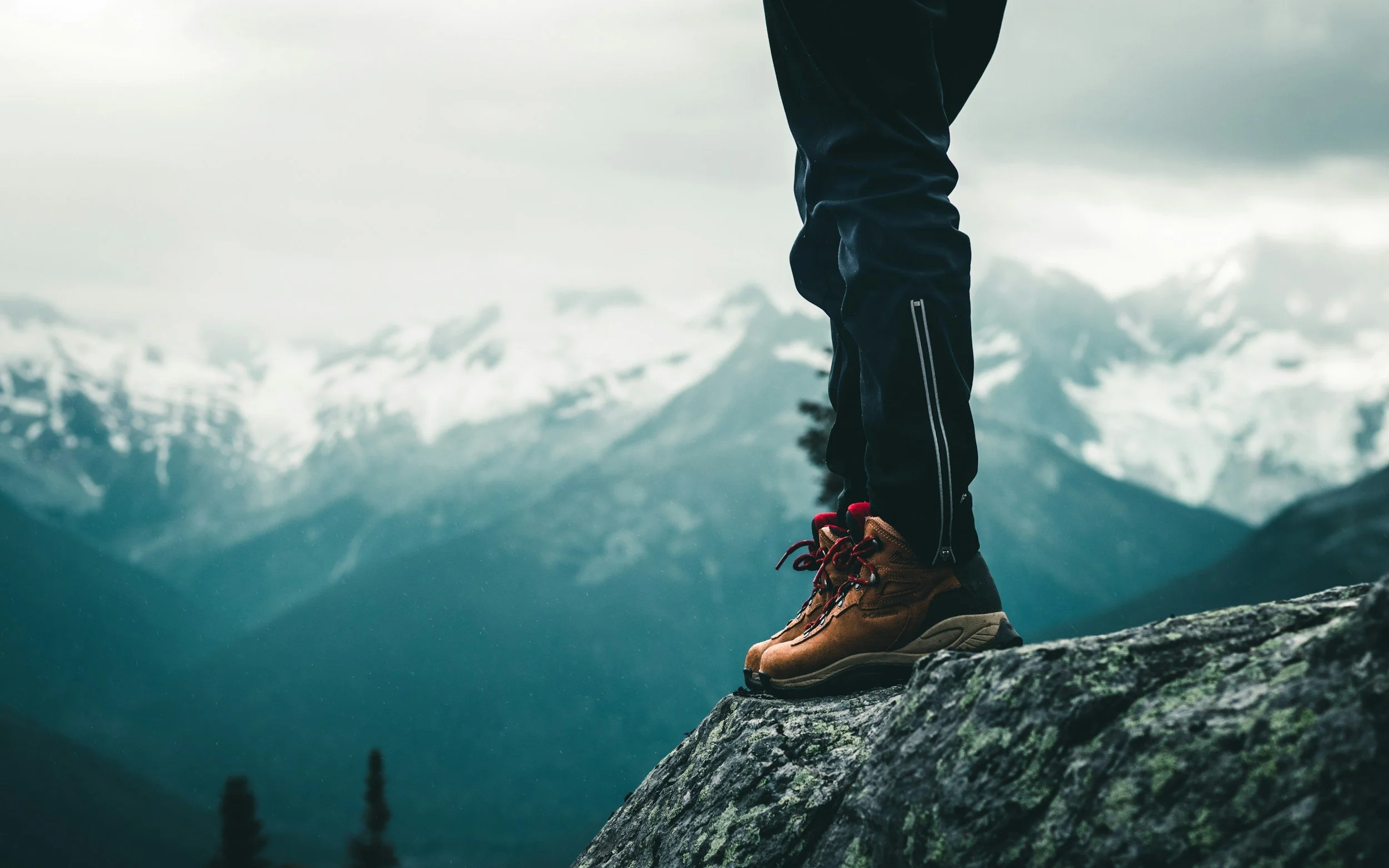
Choosing your first hiking shoes can be confusing. Trail runners, hiking shoes, mid boots, trekking boots, waterproof shoes, non-waterproof shoes, different soles, different shapes and different levels of protection can all look like they are made for hiking.
The good news is that you probably don’t need the most technical pair. The right footwear depends mainly on where you’re going, the conditions you’ll encounter and how demanding the trail is. For most beginners, the goal is not to buy the strongest or most expensive shoe. The goal is to choose footwear that matches your trails, feels comfortable on your feet and gives you enough grip and protection for the adventures you are actually planning.
First: What Type of Hiking Footwear Do You Need?
There isn’t one type of footwear that’s best for every trail. Hiking footwear ranges from light trail running shoes to heavy mountaineering boots, and each type is designed for a different purpose. As a beginner, you don’t need to understand every technical detail, but it helps to know what the main categories are.
Trail Runners
Trail runners look similar to running shoes, but they’re designed for off-road terrain. They’re usually lightweight, flexible and breathable, with more aggressive grip than normal road-running shoes.
They can be a good option for maintained trails, warm and dry conditions, faster or lighter hiking, and hikers who prefer flexible footwear. Some experienced hikers use trail runners even on difficult and long-distance routes, so they aren’t simply “beginner shoes.”
However, trail runners generally provide less protection from rocks and rough terrain than heavier hiking footwear, and they may wear faster depending on the terrain and how often you use them.
Beginner tip: choose trail runners when you want lightweight and flexible footwear, not maximum protection.
Hiking Shoes
Hiking shoes are low-cut like regular shoes, but they are built specifically for hiking. Compared with trail runners, they often have a more protective upper, firmer construction and stronger protection around the toes and sides of the foot.
They’re a great choice for day hikes, forest trails, mountain trails, moderately rocky terrain and general-purpose hiking. For someone buying their first dedicated pair of hiking footwear, this category is often a good place to start because it gives a practical balance between comfort, grip, weight and protection.
Beginner tip: hiking shoes are often the best all-round starting point for beginner day hikes.
Approach Shoes
Approach shoes are more specialised. They are designed for rocky terrain and for walking to climbing areas, where grip on rock is especially important. They usually have sticky rubber, a closer fit and a sole that performs well on rocky surfaces.
They can be useful for rocky trails, scrambling and approaches to climbing routes, but they are not usually the first choice for beginners who are mostly walking on normal hiking trails. They can also feel less comfortable for long distances if the fit is too tight or the sole is too specific for rocky terrain.
Mid Hiking Boots
Mid hiking boots extend above the ankle. They usually offer more protection from rocks, mud, vegetation and water entering around the shoe, while many models also have a more substantial sole and upper.
They can be useful for rougher mountain trails, wet or muddy conditions, colder weather, longer hikes and carrying heavier backpacks. One thing beginners sometimes misunderstand is that a higher boot doesn’t automatically mean your ankle can never roll. The overall fit, sole construction, terrain and your own stability all matter too.
Mid boots give more protection and structure, but they also add more weight.
Trekking and Backpacking Boots
Trekking and backpacking boots are the heavier, more substantial boots you may see in outdoor shops. They are generally designed for demanding terrain, multi-day trekking, heavier backpacks and harsher conditions.
They can have stiffer soles, stronger uppers and considerably more protection than ordinary hiking shoes. They’re excellent when you actually need those features, especially on long trips or rough trails with a heavier pack. But for an easy Sunday hike, they are probably unnecessary.
Beginner tip: trekking boots are useful for demanding adventures, but they may be too heavy and stiff for simple day hikes.
Mountaineering Boots
Mountaineering boots are technical boots made for alpine terrain, snow, ice, glaciers and routes where crampons may be required. They are usually much stiffer, heavier and more specialised than normal hiking boots.
These boots definitely exist in the outdoor world, but they are not normal beginner hiking footwear. They are made for very specific conditions and often require additional skills, equipment and experience. If you’re choosing footwear for ordinary day hikes, forest trails or beginner mountain walks, mountaineering boots are usually not what you need.
Fit Is More Important Than the Brand
You might read online that a particular shoe is “the best hiking shoe,” but that doesn’t mean it’s the best shoe for your foot. Different brands and models have different shapes, and your feet may feel great in one brand and uncomfortable in another.
Your heel should feel secure without excessive movement, while your toes should have enough space at the front. This is especially important because your toes need room for downhill sections. When walking downhill, your feet naturally move toward the front of your shoes. If your shoes are too short, your toes can repeatedly hit the front, and that is not something you want to discover halfway through your first mountain hike.
Your feet can also swell during several hours of walking, especially in warm weather or on longer routes. Try hiking shoes with the hiking socks you intend to wear, preferably after you’ve already been walking around for a while.
Beginner tip: comfort and fit matter more than the logo on the shoe.
Waterproof Isn’t Automatically Better
This one is easy to misunderstand. You see two versions of the same shoe: normal for €130 and waterproof for €160. The waterproof one must be better, right? Not necessarily.
Waterproof hiking shoes normally use a membrane that helps prevent outside water from reaching your foot. That can be useful for rain, wet grass, mud, snow and cold wet conditions. But waterproof shoes are generally less breathable than comparable non-waterproof shoes.
There is another catch too. If water gets inside a waterproof boot from the top, it can take longer to dry. For hot and dry summer hiking, you may actually prefer breathable non-waterproof shoes because your feet can stay cooler and dry faster.
Beginner tip: choose waterproofing because you need it, not simply because it sounds better.
Look at Protection
On more technical hiking shoes, you’ll notice extra protection around certain areas. A toe cap protects the front of the shoe when you accidentally kick a rock. Some footwear has additional protection underneath the foot to reduce the feeling of sharp rocks through the sole. More substantial uppers can also protect the sides of your feet from rocks and abrasion.
These features become more useful as the terrain gets rougher. For smooth forest paths, you may not need much of this. For a rocky mountain trail, you’ll probably appreciate it.
Protection is useful, but it also adds weight and stiffness. That’s why the best shoe is not always the most protective one. It depends on the trail.
Test Them Before Your First Big Hike
Don’t buy new hiking shoes on Friday and take them on a 20 km mountain hike on Saturday. Try them first in easier conditions.
Walk around town, take them into a forest or do a shorter hike before using them on a long or demanding trail. Pay attention to whether your toes hit the front downhill, whether your heel moves around, whether anything rubs, whether there are uncomfortable pressure points, whether they feel too hot and whether you feel confident on uneven ground.
Some modern hiking shoes require very little breaking in, while heavier leather boots may change more with use. Either way, testing isn’t only about breaking in the shoes. It’s about discovering whether they’re actually right for you.
Mula Ancala Beginner Tip
If you’re standing in an outdoor shop and don’t know where to begin, start with three simple questions.
What kind of trails you will actually hike. Will they be easy paths, forest trails, rocky mountains or demanding multi-day routes?
What conditions you will normally hike in. Will it be hot and dry, rainy and muddy, cold, snowy or mixed?
What actually feels comfortable on your feet. A shoe can have amazing reviews and still be wrong for your foot shape.
Then choose the lightest and simplest footwear that still gives you the grip, protection and weather resistance your adventures require. Don’t buy heavy mountain boots because they look more professional, and don’t buy trail runners simply because experienced hikers online say they’re better.
Buy for your feet, your trails and your adventures. As you hike more, you’ll discover what you personally value: more cushioning, more protection, less weight, more breathability or something else. That’s when choosing your next pair becomes much easier.
Start simple. Learn as you go. Every adventure begins somewhere.